Vertica K-Means 聚类算法实战
编译:JiangChong 原文:K-Means Clustering Using Vertica's In-Built Machine Learning Functions 数据集:Iris(150 条记录,4 个数值特征,3 个品种) 说明:中文注释 + 完整实验过程 + 全部 SQL 原文
概述
K-means 是最流行的聚类算法之一。它将数据分为 K 个组(簇),使得组内样本相似度高、组间差异大。属于无监督学习,即算法仅根据数据特征自行寻找分组,无需标签。
典型应用:电商用户浏览/购买行为分群,用于推荐系统。
欧几里德距离
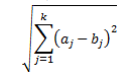
K-means 基于欧几里德距离(Euclidean distance)衡量样本间相似度,这是最常用的统计距离度量之一。在二维空间中即为两点间的直线距离:
算法步骤
- 随机将数据点分配到 K 个簇,初始化 K 个簇质心(centroid)
- 对每个观测值,计算其到每个簇质心的欧几里德距离,将其归入最近的簇
- 重新计算新簇的质心(即簇内各点均值)
- 重复步骤 2 和 3,直到质心不再变化
数据集:Iris(鸢尾花)
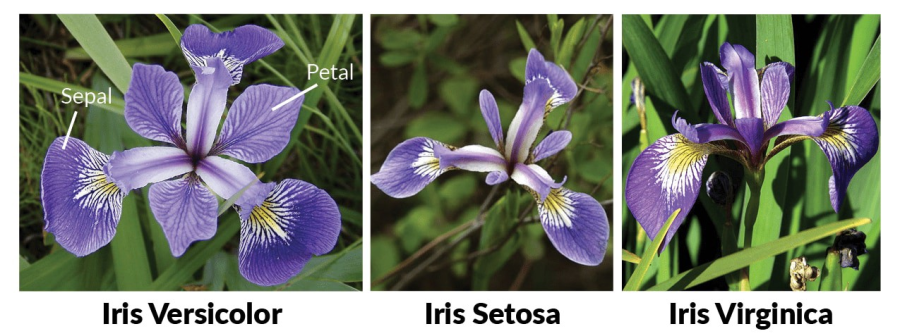
Iris 数据集包含 150 条记录、4 个数值特征(花萼长度/宽度、花瓣长度/宽度)、3 个品种标签(Setosa、Versicolor、Virginica)。其中 Setosa 与其他两个品种线性可分,而 Versicolor 和 Virginica 之间不完全线性可分。
数据加载
mldb=> CREATE TABLE iris_train (
    id int, Sepal_Length float, Sepal_Width float,
    Petal_Length float, Petal_Width float, Species varchar(10)
);
CREATE TABLE

mldb=> COPY iris_train FROM LOCAL 'iris.csv' DELIMITER ',' ENCLOSED BY '"' SKIP 1;
Rows Loaded
-------------
150
(1 row)
拆分训练集与测试集
使用 TABLESAMPLE(30) 将 30% 数据留作测试集:
mldb=> CREATE TABLE iris_test AS
    SELECT * FROM iris_train TABLESAMPLE(30);
CREATE TABLE

mldb=> DELETE FROM iris_train WHERE id IN (SELECT id FROM iris_test);
OUTPUT
--------
43
(1 row)

mldb=> COMMIT;
COMMIT
验证拆分结果:
mldb=> SELECT COUNT(*) FROM iris_train;
count
-------
107
(1 row)

mldb=> SELECT COUNT(*) FROM iris_test;
count
-------
43
(1 row)
训练集 107 行,测试集 43 行。
数据探索与预处理
数值列摘要
mldb=> SELECT SUMMARIZE_NUMCOL(
    Sepal_Length, Sepal_Width, Petal_Length, Petal_Width
) OVER() FROM iris_train;
| COLUMN | COUNT | MEAN | STDDEV | MIN | 25% | 50% | 75% | MAX |
|---|---|---|---|---|---|---|---|---|
| Petal_Length | 107 | 3.693 | 1.794 | 1.1 | 1.5 | 4.2 | 5.1 | 6.9 |
| Petal_Width | 107 | 1.176 | 0.781 | 0.1 | 0.3 | 1.3 | 1.8 | 2.5 |
| Sepal_Length | 107 | 5.804 | 0.845 | 4.3 | 5.1 | 5.7 | 6.4 | 7.7 |
| Sepal_Width | 107 | 3.044 | 0.416 | 2.2 | 2.8 | 3.0 | 3.3 | 4.2 |
缺失值检查
确认无缺失值。
分类列编码
Iris 数据集四个预测变量均为数值列,无需编码。
异常值检测
使用 DETECT_OUTLIERS 函数(robust_zscore 方法,阈值 3.0):
mldb=> SELECT DETECT_OUTLIERS('iris_outliers', 'iris_train',
    'Petal_Length,Petal_Width,Sepal_Length,Sepal_Width',
    'robust_zscore' USING PARAMETERS outlier_threshold=3.0);
DETECT_OUTLIERS
----------------------
Detected 0 outliers
(1 row)
无异常值。
归一化
使用 robust_zscore 方法归一化,并应用到测试集:
mldb=> SELECT NORMALIZE_FIT('iris_train_normalizedfit', 'iris_train',
    'Petal_Length,Petal_Width,Sepal_Length,Sepal_Width', 'robust_zscore'
    USING PARAMETERS output_view='iris_train_normalized');
NORMALIZE_FIT
---------------
Success

mldb=> CREATE VIEW iris_test_normalized AS
    SELECT APPLY_NORMALIZE(* USING PARAMETERS model_name='iris_train_normalizedfit')
    FROM iris_test;
CREATE VIEW
相关性矩阵
mldb=> SELECT CORR_MATRIX("Sepal_Length", "Sepal_Width", "Petal_Length", "Petal_Width")
    OVER() FROM iris_train_normalized;
输出(完整 16 行):
| variable_name_1 | variable_name_2 | corr_value | ignored | processed |
|---|---|---|---|---|
| Petal_Length | Petal_Width | 0.9669 | 0 | 107 |
| Petal_Width | Petal_Length | 0.9669 | 0 | 107 |
| Sepal_Width | Petal_Width | -0.3662 | 0 | 107 |
| Petal_Width | Sepal_Width | -0.3662 | 0 | 107 |
| Sepal_Width | Petal_Length | -0.4212 | 0 | 107 |
| Petal_Length | Sepal_Width | -0.4212 | 0 | 107 |
| Sepal_Length | Petal_Width | 0.8271 | 0 | 107 |
| Petal_Width | Sepal_Length | 0.8271 | 0 | 107 |
| Sepal_Length | Sepal_Width | -0.1360 | 0 | 107 |
| Sepal_Width | Sepal_Length | -0.1360 | 0 | 107 |
| Sepal_Length | Petal_Length | 0.8829 | 0 | 107 |
| Petal_Length | Sepal_Length | 0.8829 | 0 | 107 |
| Petal_Width | Petal_Width | 1 | 0 | 107 |
| Petal_Length | Petal_Length | 1 | 0 | 107 |
| Sepal_Length | Sepal_Length | 1 | 0 | 107 |
| Sepal_Width | Sepal_Width | 1 | 0 | 107 |
关键发现:
- Petal_Length 与 Petal_Width:相关系数 0.967,强正相关
- Sepal_Length 与 Petal_Length:相关系数 0.883,强正相关
- Sepal_Width 与 Petal_Length:相关系数 -0.421,中度负相关
模型训练
先用 K=3 训练(Iris 已知有 3 个品种),排除 id 和 Species 列:
mldb=> SELECT kmeans('iris_model', 'iris_train_normalized', '*', 3
    USING PARAMETERS max_iterations=20, output_view='myKmeansView',
    key_columns='id', exclude_columns='Species, id');
kmeans
---------------------------
Finished in 11 iterations
肘部法确定最优 K
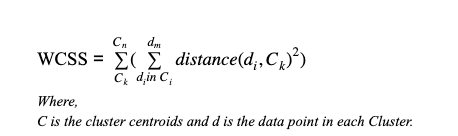
运行 K=1 到 K=8 计算 WSS(Within-Cluster Sum of Squares,簇内平方和):
| K (clusters) | Total WSS |
|---|---|
| 1 | 313.5278 |
| 2 | 125.1907 |
| 3 | 78.0122 |
| 4 | 60.4885 |
| 5 | 59.4794 |
| 6 | 54.2670 |
| 7 | 39.8311 |
| 8 | 35.5652 |
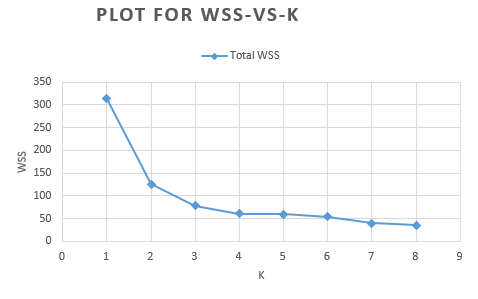
WSS 在 K=3 处出现明显拐点(肘部),K=3 到 K=4 下降幅度锐减,因此最优 K 值为 3。
模型摘要
输出:
=======
centers
=======
sepal_length|sepal_width|petal_length|petal_width
------------+-----------+------------+-----------
  1.25019  |  0.15670  |   0.63945  |  0.56719
 -0.80817  |  0.89932  |  -1.31773  | -0.89097
  0.03038  | -0.75349  |   0.04167  |  0.08203

=======
metrics
=======
Evaluation metrics:
  Total Sum of Squares: 313.52783
  Within-Cluster Sum of Squares:
    Cluster 0: 26.084614
    Cluster 1: 24.722264
    Cluster 2: 27.205308
  Total Within-Cluster Sum of Squares: 78.012186
  Between-Cluster Sum of Squares: 235.51565
  Between-Cluster SS / Total SS: 75.12%
75.12% 的 Between-Cluster SS / Total SS 表明聚类效果良好。
应用到测试集
mldb=> SELECT id, Species,
    APPLY_KMEANS(Sepal_Length, Sepal_Width, Petal_Length, Petal_Width
        USING PARAMETERS model_name='iris_model', match_by_pos='true') AS predicted
    FROM iris_test_normalized;
部分输出(共 43 行):
id  |  Species   | predicted
-----+------------+-----------
  4  | setosa     |         1
 15  | setosa     |         1
 20  | setosa     |         1
 54  | versicolor |         2
 56  | versicolor |         2
 59  | versicolor |         0
 99  | versicolor |         2
103  | virginica  |         0
127  | virginica  |         2
...  | ...        |       ...
模型评估
创建预测结果表
mldb=> CREATE TABLE iris_predicted_results AS
    SELECT *, CASE
        WHEN predicted=0 THEN 'virginica'
        WHEN predicted=1 THEN 'setosa'
        WHEN predicted=2 THEN 'versicolor'
        ELSE 'unknown'
    END AS predicted_species
    FROM (
        SELECT id, Species,
            APPLY_KMEANS(Sepal_Length, Sepal_Width, Petal_Length, Petal_Width
                USING PARAMETERS model_name='iris_model') AS predicted
            FROM iris_test_normalized
    ) foo;
CREATE TABLE
混淆矩阵
mldb=> SELECT CONFUSION_MATRIX(species, predicted_species
    USING PARAMETERS num_classes=3) OVER()
    FROM iris_predicted_results;
actual_class | class_index | predicted_0 | predicted_1 | predicted_2 | comment
--------------+-------------+-------------+-------------+-------------+------------------------------
virginica    |           0 |          11 |           4 |           0 |
versicolor   |           1 |           5 |          11 |           0 |
setosa       |           2 |           0 |           0 |          12 | Of 43 rows, 43 were used and 0 were ignored
模型正确预测了 34 个样本(virginica 11 + versicolor 11 + setosa 12),错误 9 个。
错误率
mldb=> SELECT ERROR_RATE(Species, predicted_species
    USING PARAMETERS num_classes=3) OVER()
    FROM iris_predicted_results;
class    |    error_rate     | comment
------------+-------------------+-----------------------------
setosa     |                 0 |
versicolor |            0.3125 |
virginica  | 0.266666666666667 |
           | 0.209302325581395 | Of 43 rows, 43 were used and 0 were ignored
平均错误率约 0.21(21%)。Setosa 完全正确,Versicolor 和 Virginica 各有一部分误判(因二者不可完全线性分离)。
总结
通过本文的完整实验,我们使用 Vertica 内置 ML 函数完成了:
- Iris 数据集加载与训练/测试集拆分(TABLESAMPLE 30%)
- 数据探索:异常值检测(DETECT_OUTLIERS)、归一化(NORMALIZE_FIT robust_zscore)、相关性分析(CORR_MATRIX)
- 肘部法选择最优 K=3(WSS 表 K=1 至 K=8)
- K-means 模型训练与摘要查看(get_model_summary,Between-Cluster SS / Total SS = 75.12%)
- 测试集预测(APPLY_KMEANS)
- 模型评估:混淆矩阵与错误率
扩展阅读
参考链接
- Data Science Example - Iris dataset
- Iris Species Dataset - Kaggle
- Effect of Different Distance Measures on the Performance of K-Means Algorithm
- Evaluating and Validating Cluster Results
- Normalization based K means Clustering Algorithm
- Vertica Community Edition
- Vertica Documentation
- Vertica User Community